How Much Does Custom CRM Development Cost in India in 2026?
September 15, 2026

Select a convenient time for a 30-minute discovery call
Our team will prepare for the call based on your requirements.
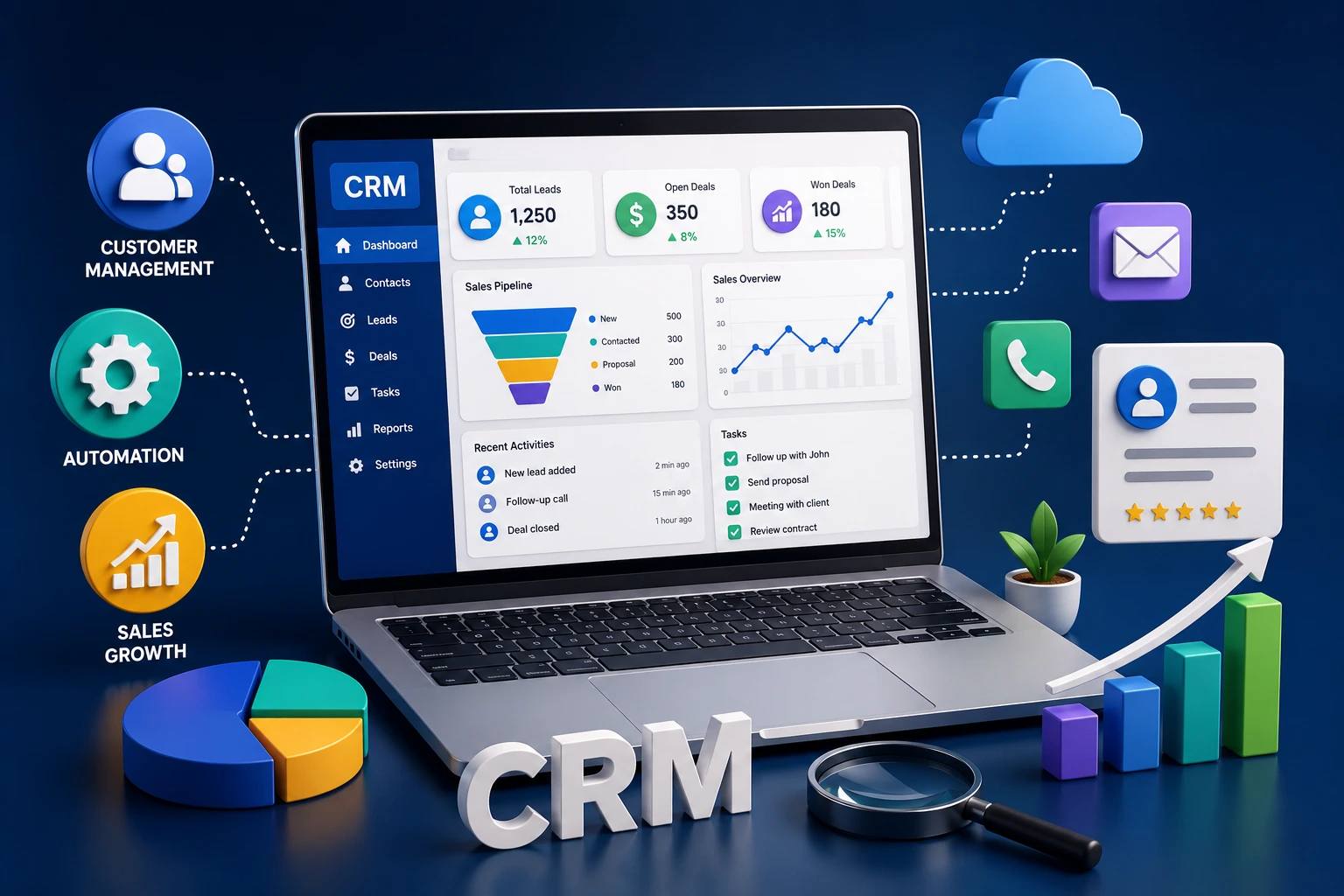
Many growing businesses struggle to manage customer relationships as their operations expand. Customer data often becomes scattered across spreadsheets, emails, phone calls, and multiple software tools, making it difficult to track leads, manage follow-ups, monitor sales activities, and deliver consistent customer service.
A custom CRM system helps businesses centralize customer information, automate repetitive tasks, improve team collaboration, and streamline operations. Companies investing in CRM and Portal Development often see improved efficiency, better customer retention, and increased revenue growth.
If your team frequently misses inquiries or forgets to follow up with prospects, it may be time to implement a CRM solution. A centralized system ensures every lead is captured, tracked, and managed throughout the sales process.
When employees spend hours sending follow-up emails, assigning tasks, and updating records manually, productivity suffers. Integrating AI Automation with your CRM can automate routine workflows and allow your team to focus on higher-value activities.
Spreadsheets work for small businesses, but they quickly become difficult to maintain as customer data grows. A custom CRM provides a structured environment for managing contacts, sales pipelines, and customer interactions.
Many businesses receive inquiries through contact forms, landing pages, and online campaigns but struggle to manage them effectively. Combining your CRM with professional Web Development services allows leads to flow directly into your system without manual entry.
Without accurate reporting, it's difficult to understand sales performance, customer behavior, and team productivity. Modern CRM platforms provide dashboards and analytics that support better decision-making.
When sales, support, and management teams use different tools, communication gaps can occur. A CRM keeps everyone working from the same customer data, improving collaboration across departments.
Customers expect fast and personalized support. A CRM helps your team access customer history, previous conversations, and support records, making it easier to deliver a consistent experience.
As your company expands, inefficient processes can create bottlenecks. Many organizations combine CRM solutions with Custom Software Development to create workflows tailored to their unique business requirements.
Growing businesses need systems that can handle increased customer volumes and operational complexity. A scalable CRM provides the foundation needed to support long-term growth.
If your accounting software, website, customer portal, and internal tools operate independently, valuable information can become fragmented. A CRM integrated with Business Process Automation solutions helps create a connected ecosystem that improves efficiency across the organization.
A CRM system is more than a customer database—it's a powerful tool for improving sales, customer service, and operational efficiency. Whether you're looking to automate workflows, improve lead management, or streamline internal processes, the right CRM solution can transform the way your business operates.
If you're ready to optimize your customer management processes and build a scalable business infrastructure, explore our CRM and Portal Development, AI Automation, and Web Development services to get started.
Discover how AI can streamline your operations and improve patient care.