How Much Does Custom CRM Development Cost in India in 2026?
September 15, 2026

Manufacturing businesses often invest in ERP systems to improve efficiency and reduce manual work. But before choosing an ERP, you need to understand where your current operations are struggling.
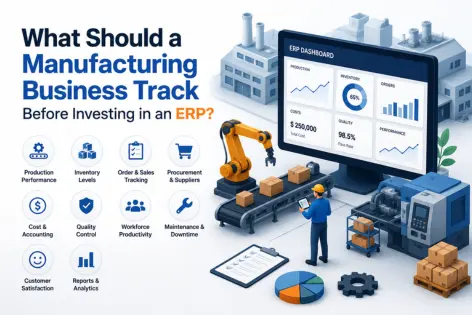
Track production output, cycle time, machine downtime, delays, rework, and rejected units. This helps identify bottlenecks and areas that need automation.
Monitor raw materials, work-in-progress, finished goods, stock-outs, excess inventory, and stock movement. This shows where better inventory visibility is needed.
Track purchase orders, supplier lead times, delivery performance, material shortages, and quality issues. This helps identify opportunities for procurement automation.
Measure order processing time, fulfillment time, dispatch delays, and late deliveries. This reveals gaps between sales, production, inventory, and dispatch.
Track material costs, labor, wastage, cost per unit, defective products, rework, and customer complaints. These metrics help improve costing and quality management.
Identify tasks that depend on Excel, paper records, emails, or manual data entry. These are often the best candidates for ERP automation.
Once you understand these areas, define the ERP features you actually need—such as production planning, inventory, procurement, quality control, warehouse management, finance, and reporting.
A successful ERP investment starts with understanding your current processes. Track the right data first, then choose a system that solves your real operational problems.
Discover how AI can streamline your operations and improve patient care.