
How Much Does Custom CRM Development Cost in India in 2026?
September 15, 2026

Select a convenient time for a 30-minute discovery call
Our team will prepare for the call based on your requirements.
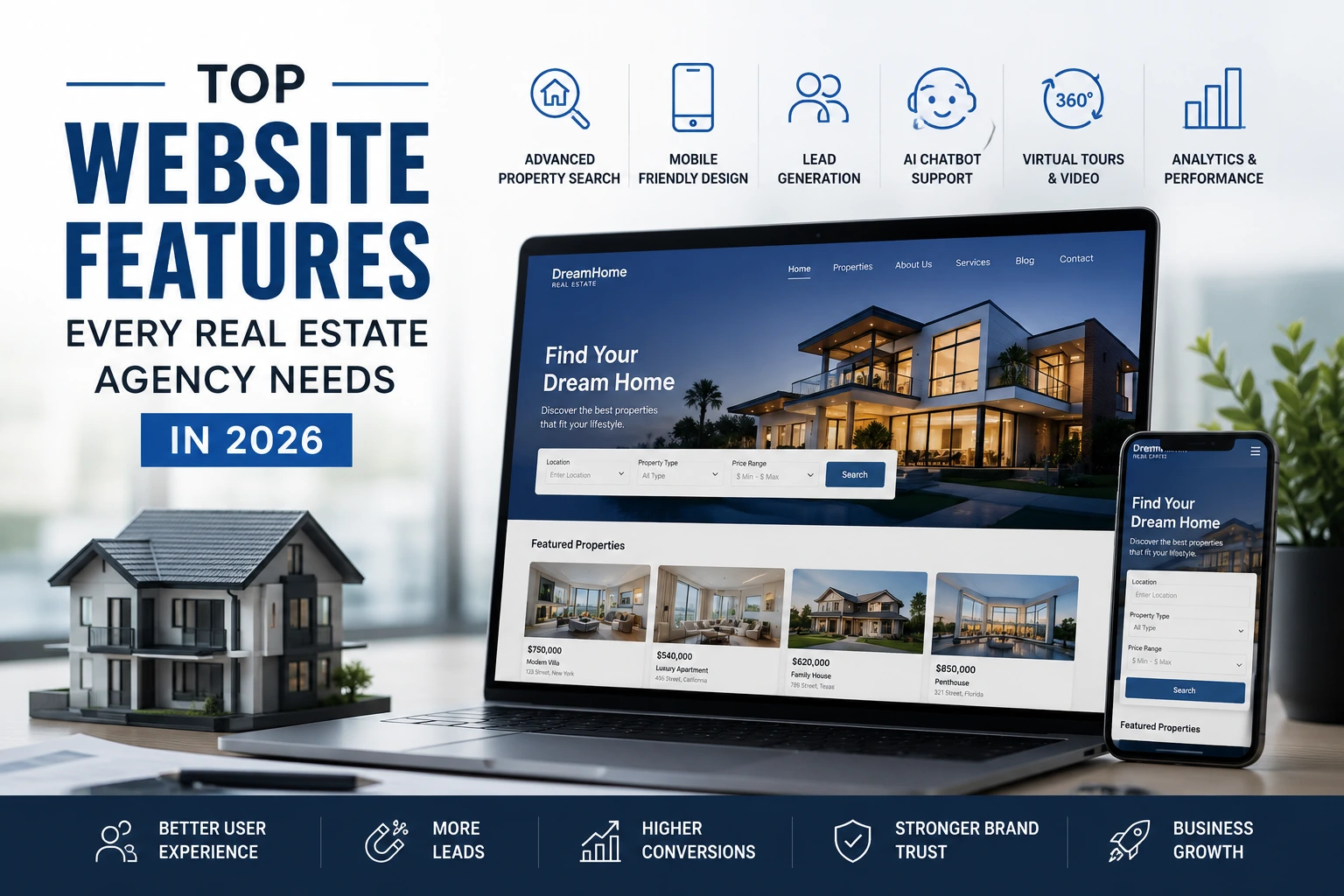
The real estate industry is becoming increasingly digital, and clients expect a seamless online experience when searching for properties. A modern real estate website is no longer just an online brochure—it is a lead generation tool, a property showcase platform, and a customer engagement hub. Businesses investing in Real Estate Solutions are better positioned to attract buyers, generate leads, and streamline property management processes.
Visitors should be able to search properties by location, price, property type, bedrooms, amenities, and custom filters. Advanced search functionality improves user experience and helps buyers find relevant listings quickly. Modern Real Estate Solutions often include intelligent search capabilities that make property discovery faster and more effective.
Property pages should include high-quality images, virtual tours, floor plans, videos, maps, and detailed descriptions. Interactive listings help buyers make informed decisions before scheduling a viewing.
Most property searches now happen on mobile devices. A responsive website ensures a seamless experience across smartphones, tablets, and desktops. Mobile optimization is a core component of successful Real Estate Solutions because it improves accessibility and engagement.
Every property page should include inquiry forms, callback requests, appointment booking options, and contact information to convert visitors into leads.
Connecting your website with a CRM helps manage leads, automate follow-ups, and improve communication with prospects. Advanced CRM integration is one of the most valuable features offered through professional Real Estate Solutions.
Virtual property tours and video walkthroughs allow potential buyers to explore properties remotely, increasing engagement and saving time.
Location is one of the most important factors in real estate. Interactive maps help visitors understand nearby amenities, schools, transportation, and points of interest.
AI chatbots can answer common questions, schedule appointments, qualify leads, and provide instant assistance to visitors. Modern Real Estate Solutions increasingly leverage AI to improve customer experience and response times.
Search engine optimization helps real estate agencies rank higher in search results and attract more qualified traffic.
Website analytics provide insights into visitor behavior, lead generation performance, and marketing effectiveness.
A successful real estate website should do more than display properties. It should help attract visitors, generate leads, build trust, and support business growth. Investing in these website features can give real estate agencies a significant competitive advantage in 2026 and beyond. Businesses looking to implement these capabilities should consider comprehensive Real Estate Solutions that combine website development, CRM integration, automation, and digital marketing.
Discover how AI can streamline your operations and improve patient care.