
How Much Does Custom CRM Development Cost in India in 2026?
September 09, 2026

Select a convenient time for a 30-minute discovery call
Our team will prepare for the call based on your requirements.
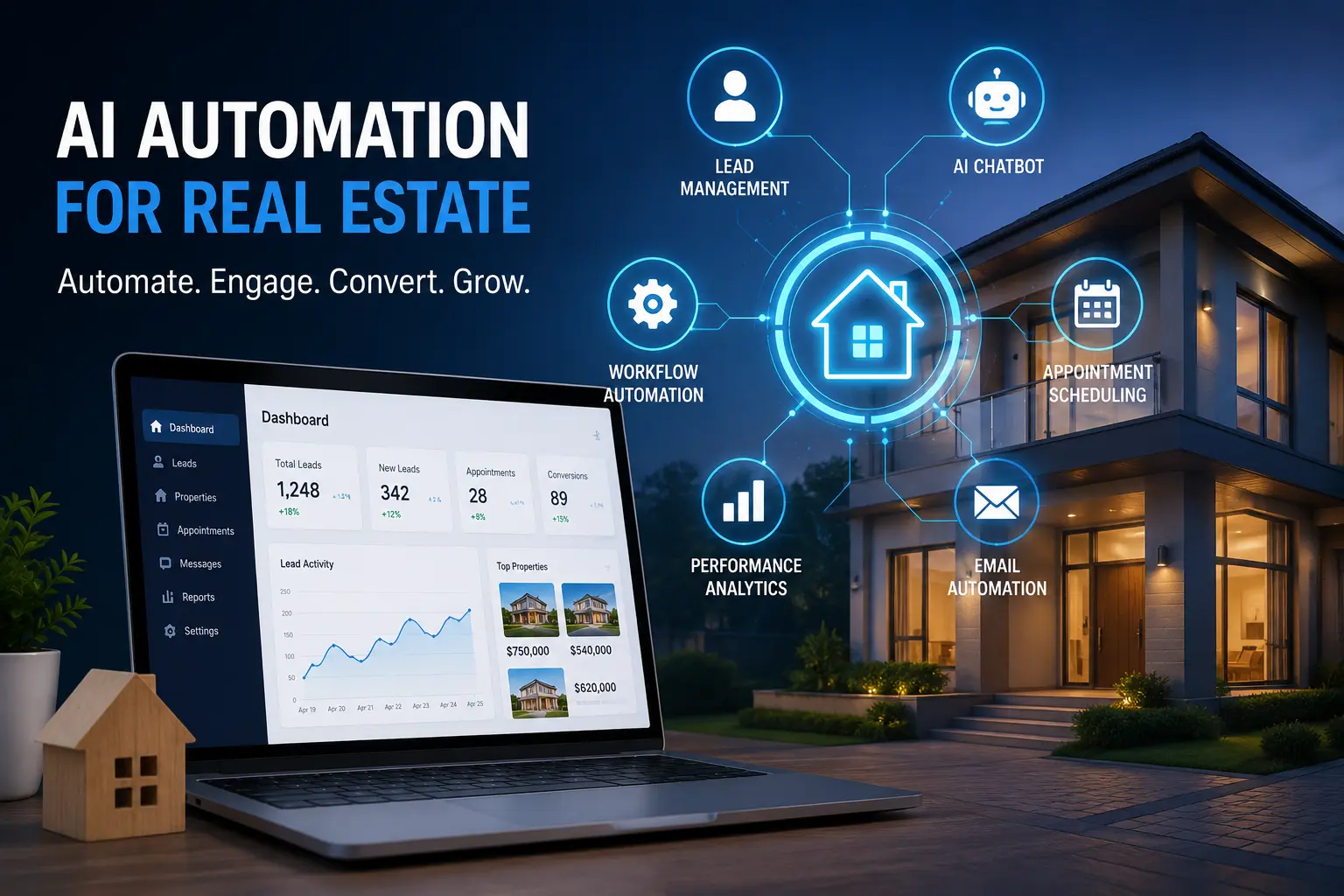
The real estate industry continues to evolve, and buyers and sellers now expect seamless digital experiences. A modern real estate website is no longer just an online brochure—it is a powerful lead generation and customer engagement tool.
To stay competitive in 2026, real estate companies need websites that are fast, user-friendly, mobile-responsive, and designed to convert visitors into clients.
Property search functionality is one of the most important features of a real estate website. Visitors should be able to filter properties based on:
An advanced search experience helps users quickly find properties that match their requirements.
Most property searches now begin on smartphones. A mobile-friendly website ensures that property listings, images, and contact forms work perfectly across all devices.
Responsive design improves user experience and supports better search engine rankings.
Visual content plays a major role in real estate marketing. Every property listing should include:
Quality visuals help potential buyers make informed decisions and increase engagement.
Location is a critical factor in real estate decisions. Interactive maps help visitors explore nearby schools, hospitals, shopping centers, transportation options, and other local amenities.
Map integration provides valuable context and improves the overall user experience.
A real estate website should make it easy for visitors to get in touch. Strategic lead capture forms can help generate inquiries from interested buyers and sellers.
Useful forms include:
Customer Relationship Management (CRM) integration helps real estate businesses manage leads efficiently. When a visitor submits a form, their information can be automatically stored and organized for follow-up.
CRM integration improves communication and increases conversion opportunities.
Website speed directly affects user experience and search rankings. Slow-loading pages can lead to higher bounce rates and lost leads.
Real estate websites should be optimized for:
Search Engine Optimization (SEO) helps real estate companies attract organic traffic from search engines.
Key SEO elements include:
Strong SEO strategies help potential clients discover your listings online.
Trust is essential in the real estate industry. Displaying testimonials and success stories helps build credibility and demonstrates your experience to potential clients.
Positive reviews can significantly influence purchasing decisions.
Modern websites increasingly use AI-powered chat solutions to answer questions, qualify leads, and provide instant assistance.
Chat functionality allows businesses to engage visitors even outside normal working hours.
A successful real estate website in 2026 must do more than display property listings. It should provide a seamless user experience, capture leads efficiently, and support long-term business growth.
By implementing advanced search features, CRM integration, mobile optimization, SEO best practices, and AI-powered support, real estate companies can create a competitive digital presence that attracts more clients and generates more opportunities.
Looking to build a modern real estate website?
Investing in the right features today can help your business attract more buyers, generate qualified leads, and grow faster in an increasingly digital marketplace.
Discover how AI can streamline your operations and improve patient care.